ADULT BETRAYAL IN HEATHENRY – OATH BREAKERS
First off, we do not seek to be the moral police in every Heathen's private life. Adults make choices, and those choices have consequences. What we advise is for us based on our reading of the lore and our experience. If it fits your view outside the Tribe so, be it.
But there are some matters that must be addressed clearly, because they touch the foundations of tribal life: honor, loyalty, brotherhood, discipline, integrity, and Frith.
One of those matters is adultery in heathenry whether within a community, kindred, or within a tribe.
The Hávamál is clear in its counsel: never seduce another man’s wife and never make her your mistress. This is not a small matter in the words of the High One. It is a warning about desire becoming dishonor, and appetite becoming betrayal.
The Völuspá is also clear. In its vision of Náströnd, the Corpse Shore, the völva sees a hall far from the sun, its doors facing north, its roof dripping venom, its structure woven with serpents. There she sees oath-breakers, murderers, and the one who seduces another’s close-trusted wife.
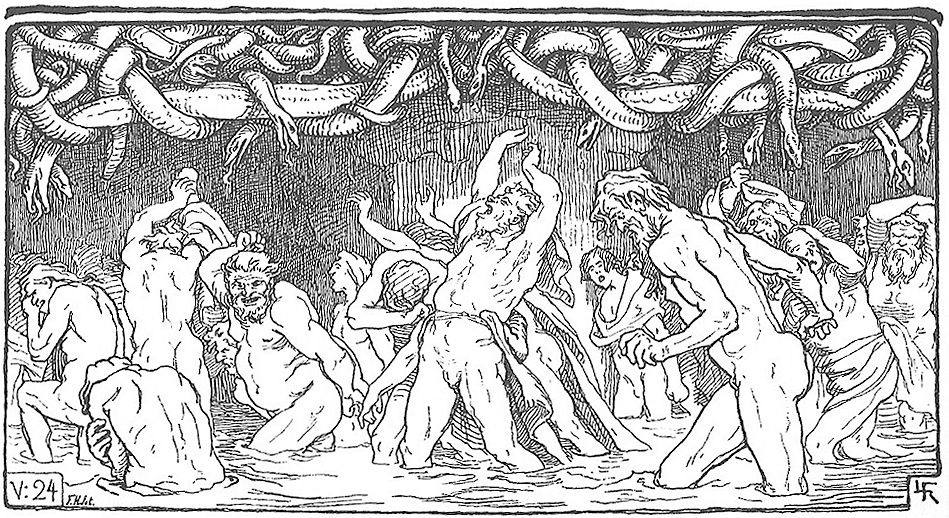
Snorri repeats this vision in Gylfaginning in the Prose Edda, describing Náströnd as a great and evil hall where oath-breakers and murderers wade rivers of venom.
That should give any serious Heathen pause.
To be clear: dating is not the issue. Heathens meeting other Heathens is not the issue. Single adults freely choosing one another is not the issue. The issue is going after another person’s spouse - male or female.
Within a closed heathen circle, a tribe, that is not merely “personal drama.” It is a violation of Frith. It is a violation of trust. It is a violation of loyalty. It is a violation of brotherhood. It is a violation of discipline and integrity.
We have heard of this in other large Heathen and Asatru groups, and some smaller, tales of betrayal some open, we have even seen a few people come to us with a background where we knew they had already done it.
That is worth pondering. If someone would break an oath to a spouse, would they break an oath to a tribe? We believe that question must be weighed seriously in accepting members.
This does not mean a marriage can never end. The Norse understood divorce. There were lawful and socially recognized ways to leave a marriage. If a bond has truly ended, then end it honestly. Divorce. Separate openly. Become a free and single person and then make your choices as such. About 75 percent of our Tribe has one or more marriages - that comes with the turf for military and government service.
But while you are inside the oath, while you are inside the marriage bond, that bond matters. It matters to the couple, it matters to their family especially if there are children, and it matters to their faith community. A heathen does not get to claim honor while secretly violating the household. You do not get to claim Frith while bringing betrayal into the hall. You do not get to claim loyalty to the Tribe while treating loyalty to a spouse as optional. There is a way to leave a marriage. There is a way to begin again. There is a way to seek love honestly. But adultery is not that way. If you are bound, honor the bond. If the bond must end, end it openly – honorably. No half a$$ solutions. Then walk forward as a free person, not as an oath-breaker. Divorce is a trial by fire - most of us have been there and done that. The emotional and financial costs are real. But honor is maintained in this set of circumstances.
Náströnd is not for warriors who fought honorably. It is not for those who killed under lawful duty, battle, or necessity. The condemnation is aimed at murderers, oath-breakers, and those who corrupt the trusted bond of another’s household.
The code on this is older in Heathenry than Norse times. Tacitus gives us a glimpse of the Germanic Heathen “code of conduct,” in Germania he shows a Germanic world where betrayal, cowardice, desertion, dishonor in marriage, and violation of public trust were not treated lightly. Marriage was a bond of household, kin, arms, and future generations. War-band loyalty was sacred. Public disgrace could remove a man from sacred rites and council. In that world, oath-breaking was not a lifestyle choice. It was a wound against the whole community
That distinction matters. Odin’s Warrior Tribe is built on faith, Frith, loyalty, honor, brotherhood, and oath. We are not perfect people, and we do not demand perfection. But we do demand seriousness.
The message is clear. Do not seduce another man’s wife. Do not make another person’s spouse your mistress. Do not bring that poison into the hall. If you want love, seek it honorably. Because a hall cannot stand where oaths mean nothing. And it is oath breaking.
Sources: Hávamál; Völuspá 38–39; Snorri Sturluson, Gylfaginning 52.
“Never seduce anothers wife,
Never make her your mistress.”
Havamal
“Sal sá hón standa
sólo fiarri,
Nástrǫndu á,
norðr horfa dyrr.
Fello eitrdropar
inn um lióra.
Sá er undinn salr
orma hryggiom.
Sá hón þar vaða
þunga strauma
menn meinsvara
ok morðvarga
ok þannz annars glepr
eyrarúno.
Þar saug Níðhǫggr
nái framgengna,
sleit vargr vera.
Vitoð ér enn, eða hvat?“
Völuspá 38-39, Dronke's edition
“A hall she saw standing
remote from the sun
on Dead Body Shore.
Its door looks north.
There fell drops of venom
in through the roof vent.
That hall is woven
of serpents’ spines.
She saw there wading
onerous streams
men perjured
and wolfish murderers
and the one who seduces
another’s close-trusted wife.
There Malice Striker sucked
corpses of the dead,
the wolf tore men.
Do you still seek to know? And what?”
Völuspá 38-39, Dronke's translation
“Á Náströndum er mikill salr ok illr, ok horfa í norðr dyrr, hann er ok ofinn allr ormahryggjum sem vandahús, en ormahöfuð öll vitu inn í húsit ok blása eitri, svá at eptir salnum renna eitrár, ok vaða þær ár eiðrofar ok morðvargar, svá sem hér segir:
Sal veit ek standa
sólu fjarri
Náströndu á,
norðr horfa dyrr.
Falla eitrdropar
inn of ljóra.
Sá er undinn salr
orma hryggjum.
Skulu þar vaða
þunga strauma
menn meinsvara
ok morðvargar.
En í Hvergelmi er verst:
Þar kvelr Níðhöggr“
Snorri Gylfaginning 52, EB's edition
“On Nástrand [Strand of the Dead] is a great hall and evil, and its doors face to the north: it is all woven of serpent-backs like a wattle-house; and all the snake-heads turn into the house and blow venom, so that along the hall run rivers of venom; and they who have broken oaths, and murderers, wade those rivers, even as it says here:
I know a hall standing
far from the sun,
In Nástrand:
the doors to northward are turned;
Venom-drops falls
down from the roof-holes;
That hall is bordered
with backs of serpents.
There are doomed to wade
the weltering streams
Men that are mansworn,
and they that murderers are.
But it is worst in Hvergelmir:
There the cursed snake tears”
Gylfaginning 52, Brodeur's translation
The original and an animated illustration based on Náströnd (1895) by Lorenz Frølich.


Comments